

Planning an event feels overwhelming when you face endless food choices. You need dishes that please diverse crowds, stay fresh during service, and fit your budget without compromising quality.
This guide reveals the most requested catering options across weddings, corporate events, and parties. You will discover which foods guests actually enjoy, how to balance your menu, and smart strategies to make every bite memorable.
Classic Appetizers That Never Disappoint
Guests arrive hungry, and appetizers set the tone for your entire event. These starters keep people engaged while they mingle and wait for the main course.
Finger Foods Everyone Loves
Bruschetta tops the list because it offers fresh flavors in a single bite. Caterers layer tomatoes, basil, and garlic on toasted bread, creating a Mediterranean favorite that works for any season.
Stuffed mushrooms provide a savory option that disappears quickly from platters. Chefs fill mushroom caps with cream cheese, herbs, and breadcrumbs before baking them to golden perfection.
Spring rolls bring an Asian flair to your spread. These crispy wraps contain vegetables, sometimes shrimp or chicken, and come with sweet chili or peanut dipping sauces that guests adore.
Dips and Spreads for Sharing
Spinach artichoke dip remains the champion of warm appetizers. This creamy blend combines three cheeses with spinach and artichoke hearts, served bubbling hot with crackers or bread.
Hummus platters offer a healthy alternative that satisfies vegetarian guests. Caterers arrange multiple hummus flavors like roasted red pepper, garlic, and traditional chickpea alongside fresh vegetables and pita chips.
Cheese boards have evolved into Instagram-worthy centerpieces. Professional caterers arrange aged cheddar, brie, gouda, and blue cheese with grapes, nuts, honey, and artisan crackers for visual appeal and diverse tastes.
Also Read : Famous Food in Mexico: Complete Guide 2025
Main Course Stars That Steal the Show
The main course defines your catering experience. These dishes handle large-scale preparation while maintaining the flavor and presentation guests expect.
Poultry Options That Please Crowds
Chicken piccata delivers restaurant-quality taste without the premium price tag. Caterers pan-sear chicken breasts and finish them with a bright lemon-caper sauce that cuts through the richness.
Herb-roasted chicken remains popular because it works hot or at room temperature. Rosemary, thyme, and garlic create an aromatic crust that keeps the meat juicy even during buffet service.
Beef Dishes for Formal Affairs
Prime rib appears at upscale events where you want to impress attendees. Caterers slow-roast whole cuts to medium-rare perfection, then slice portions to order with au jus and horseradish cream.
Beef tenderloin offers a leaner alternative with the same premium feel. This cut requires less cooking time and provides consistent quality across hundreds of servings.
Meatballs in marinara sauce satisfy comfort food cravings at casual gatherings. Caterers serve them over pasta or as standalone portions with crusty bread for sauce soaking.
Seafood Selections for Coastal Vibes
Grilled salmon wins over health-conscious guests and seafood lovers alike. Caterers brush fillets with teriyaki glaze, lemon butter, or dill sauce depending on your event theme.
Shrimp scampi works beautifully for buffet lines because it holds well under warming lamps. Garlic, and butter create a classic sauce that pairs with rice or pasta.
Fish tacos bring a casual, interactive element to your menu. Guests build their own combinations with grilled tilapia or mahi-mahi, cabbage slaw, pico de gallo, and lime crema.
Side Dishes That Complete the Meal
Sides balance your menu and ensure every guest finds something they enjoy. These accompaniments add color, nutrition, and variety to each plate.
Starches That Satisfy
Garlic mashed potatoes remain the ultimate comfort side. Caterers whip Yukon gold potatoes with butter, cream, and roasted garlic until they reach cloud-like consistency.
Wild rice pilaf adds texture and earthy flavors that complement poultry and fish. This whole-grain option includes dried cranberries, pecans, and fresh herbs for visual interest.
Pasta salad serves dual purposes as a side dish and a standalone vegetarian option. Italian dressing, fresh vegetables, mozzarella, and rotini pasta create a crowd-pleaser that works cold or room temperature.
Vegetables People Actually Eat
Roasted seasonal vegetables bring color to buffet tables. Caterers toss carrots, Brussels sprouts, bell peppers, and zucchini with olive oil and sea salt before roasting until caramelized.
Green bean almondine offers a classic French preparation that elevates simple vegetables. Blanched green beans get a quick sauté with butter and toasted almond slivers for added crunch.
Caprese salad provides a fresh, light option during summer events. Sliced tomatoes, fresh mozzarella, and basil leaves get drizzled with balsamic reduction for a simple yet elegant presentation.
Desserts That End on a High Note
Sweet endings leave lasting impressions on your guests. These desserts balance indulgence with practical service considerations for catering settings.
Individual Treats for Easy Serving
Mini cheesecakes eliminate the need for cutting and plating. Caterers prepare these bite-sized desserts in flavors like classic New York, chocolate, strawberry, and key lime.
Chocolate truffles add sophistication to dessert tables. These rich, ganache-filled spheres come rolled in cocoa powder, chopped nuts, or coconut flakes for variety.
Cookies and brownies work perfectly for casual events and afternoon meetings. Caterers arrange assorted flavors so guests can sample multiple options without committing to a large portion.
Show-Stopping Centerpieces
Tiered cakes remain wedding staples for good reason. Professional bakers create stunning designs with fondant, buttercream, fresh flowers, and flavors ranging from vanilla bean to red velvet.
Dessert bars let guests customize their sweets. Popular setups include sundae stations with multiple ice cream flavors and toppings, or s’mores bars with various chocolates and crackers.
Fruit displays provide a lighter alternative to heavy desserts. Caterers carve melons, arrange berries, and add chocolate or caramel dipping sauces for guests who want something refreshing.
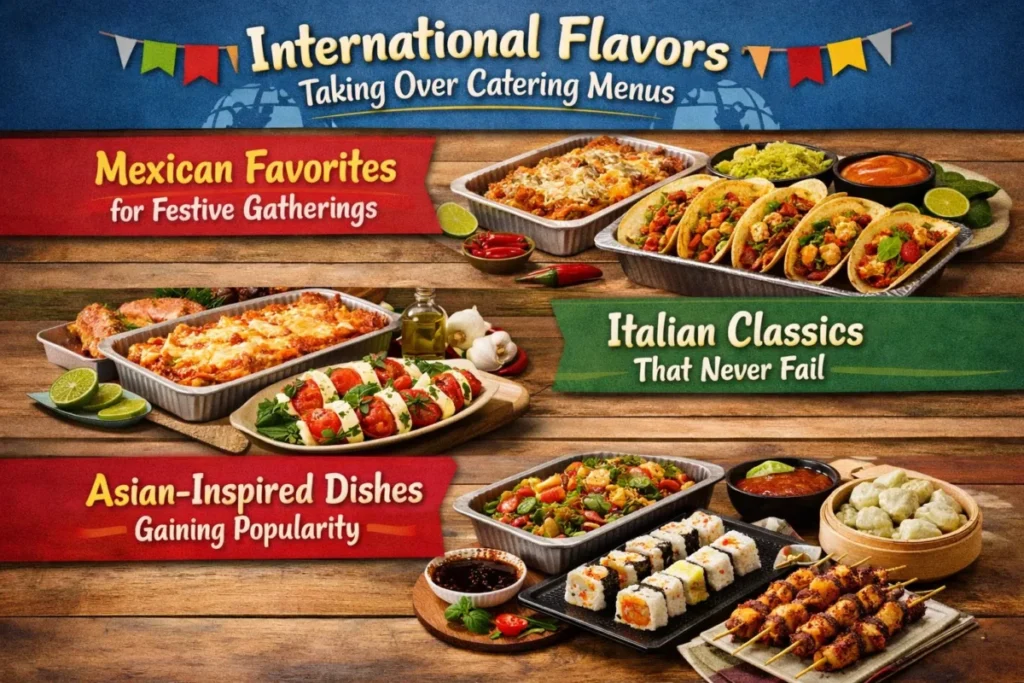
International Flavors Taking Over Catering Menus
Global cuisines expand beyond traditional American fare, giving hosts more creative options for themed events and diverse guest lists.
Mexican Favorites for Festive Gatherings
Taco bars rank among the most interactive catering setups. Guests build custom tacos with seasoned beef, grilled chicken, or carnitas, then add toppings like guacamole, salsa, cheese, and sour cream.
Enchiladas work well for sit-down dinners because caterers can prepare them in advance. Corn tortillas filled with chicken or cheese and smothered in red or green sauce satisfy even picky eaters.
Quesadillas appeal to both adults and children. These grilled tortillas filled with melted cheese and optional proteins serve as appetizers or main dishes depending on portion size.
Italian Classics That Never Fail
Lasagna feeds large groups efficiently while delivering rich, comforting flavors. Caterers layer pasta sheets with meat sauce, ricotta, mozzarella, and parmesan before baking in hotel pans.
Chicken parmesan brings Italian-American charm to your menu. Breaded chicken cutlets get topped with marinara and melted cheese, then served over spaghetti or on slider buns.
Capellini pomodoro offers a lighter pasta option. Angel hair pasta tossed with fresh tomatoes, basil, garlic, and olive oil satisfies vegetarians and health-conscious attendees.
Asian-Inspired Dishes Gaining Popularity
Teriyaki chicken bowls combine protein, vegetables, and rice in one convenient serving. The sweet-savory glaze appeals to mainstream tastes while introducing Asian flavors.
Spring rolls and pot stickers make excellent passed appetizers. Caterers serve these dumplings with soy-ginger dipping sauce for an interactive starter that disappears quickly.
Pad thai brings bold flavors to adventurous menus. Rice noodles stir-fried with shrimp or chicken, bean sprouts, peanuts, and tamarind sauce create a memorable main course.
Dietary Accommodations Every Caterer Should Offer
Modern catering requires flexibility to address various dietary needs. Smart planning ensures all guests enjoy the meal regardless of restrictions.
Plant-Based Options for Vegan Guests
Vegetable stir-fry delivers vibrant colors and fresh flavors without animal products. Caterers use sesame oil, ginger, and soy sauce to season broccoli, bell peppers, snap peas, and carrots.
Quinoa bowls provide complete protein for vegan attendees. These grain bowls feature roasted vegetables, chickpeas, avocado, and tahini dressing for a filling, nutritious meal.
Stuffed bell peppers work as beautiful individual portions. Caterers fill halved peppers with seasoned rice, black beans, corn, and tomatoes before baking until tender.
Gluten-Free Selections That Taste Great
Grilled meat and vegetable skewers naturally avoid gluten. Marinated chicken, beef, or shrimp alternates with zucchini, mushrooms, and cherry tomatoes on wooden sticks.
Rice-based dishes accommodate gluten-free guests easily. Risotto, fried rice, and rice pilaf provide satisfying starch options without wheat ingredients.
Flourless chocolate cake proves that gluten-free desserts can wow everyone. This dense, fudgy cake relies on eggs and chocolate for structure, creating an indulgent finale.
According to the catering industry research, dietary accommodations have become standard expectations rather than special requests at modern events.
Beverage Pairings That Complement Your Menu
Drinks enhance the dining experience and keep guests refreshed throughout your event. These options work across different occasions and budgets.
Non-Alcoholic Refreshments
Infused water stations add elegance without cost. Caterers prepare pitchers with cucumber-mint, strawberry-basil, or lemon-rosemary combinations for natural flavor.
Fresh lemonade and iced tea remain Southern staples that please all ages. Sweet tea, unsweetened tea, and pink lemonade give guests variety without overwhelming choices.
Coffee and tea service concludes formal meals properly. Caterers set up stations with regular and decaf coffee, various tea selections, cream, sugar, and alternative sweeteners.
Budget-Friendly Foods That Still Impress
Cost-conscious planning does not mean sacrificing quality. These affordable options deliver maximum impact without breaking your budget.
Economical Proteins That Bulk Up Menus
Pulled pork feeds crowds for minimal investment. Slow-cooked pork shoulder shreds easily and absorbs BBQ sauce flavors, serving well on buns or as a plated entree.
Baked ziti costs less than individual pasta dishes while satisfying hearty appetites. This casserole-style preparation combines pasta, marinara, ricotta, and mozzarella in single pans.
Chicken drumsticks provide affordable finger food for casual events. Caterers season them with various rubs and bake until crispy for a budget-friendly protein option.
Stretching Your Catering Dollar
Buffet service reduces labor costs compared to plated dinners. Guests serve themselves, requiring fewer servers while offering more variety.
Seasonal ingredients cost less and taste better. Caterers who plan menus around what farmers currently harvest pass savings to clients while ensuring peak freshness.
Strategic timing saves money too. Brunch receptions feature less expensive breakfast foods while avoiding premium dinner pricing that caterers charge for evening events.
Food Safety Considerations for Catered Events
Proper handling protects guests from foodborne illness. Professional caterers follow strict protocols to ensure every dish remains safe from kitchen to consumption.
Hot foods must stay above 140 degrees Fahrenheit during service. Caterers use chafing dishes, warming trays, and Sternos to maintain proper temperatures throughout events.
Cold foods require refrigeration below 40 degrees Fahrenheit. Ice baths, refrigerated tables, and careful timing prevent bacterial growth in items like salads and desserts.
Cross-contamination prevention matters especially for guests with allergies. Professional caterers use separate utensils, cutting boards, and preparation areas for allergen-free dishes.
The FDA food safety guidelines recommend discarding any perishable foods left at room temperature for more than two hours.
How to Choose the Right Caterer for Your Event
Selecting a caterer determines your event success more than almost any other decision. These factors help you identify providers who will deliver exceptional service.
Review menus carefully to confirm they offer your preferred dishes. Some caterers specialize in specific cuisines while others provide broad options across multiple styles.
Request tastings before signing contracts. Sampling food quality, presentation, and portion sizes firsthand prevents disappointing surprises on your event day.
Check references from recent clients who hosted similar events. Their experiences reveal how caterers handle challenges, communicate changes, and treat guests during service.
Verify licensing, insurance, and health department certifications. Professional caterers maintain proper documentation and welcome questions about their credentials.
Making Your Final Menu Decisions
You now understand which catering foods consistently please guests across different event types. Popular options like grilled chicken, fresh salads, and interactive stations create memorable dining experiences.
Start planning by identifying your guest count, budget, and any dietary restrictions. Then select 2-3 main courses, 3-4 sides, appetizers, and dessert options that complement each other. Trust your caterer to execute your vision with professional skill and attention to detail that makes your event special.
FAQ: Popular Catering Foods
What finger foods work best for large catering events?
Bruschetta, stuffed mushrooms, spring rolls, and cheese boards top the list. These appetizers require no utensils, hold well during service, and offer diverse flavors that please most guests without dietary conflicts.
How many main course options should I offer at a catered event?
Two to three main courses provide enough variety without overwhelming guests. Include one poultry, one beef or seafood, and one vegetarian option to accommodate different preferences and dietary needs effectively.
Which catering foods accommodate the most dietary restrictions?
Grilled vegetable platters, rice-based dishes, fresh fruit displays, and clearly labeled gluten-free or vegan options work universally. Professional caterers separate allergen-free items and use dedicated serving utensils to prevent cross-contamination issues.
What desserts travel well for catered events?
Mini cheesecakes, cookies, brownies, and individual portions travel better than large cakes. These bite-sized treats maintain presentation during transport and simplify serving without requiring plates, forks, or cutting at the venue.
Finding the Perfect Catering Partner in Atlanta
When you search for exceptional catering that combines quality ingredients with creative menu options, local expertise makes all the difference. Atlanta offers diverse culinary talent that understands both traditional favorites and modern trends. Whether you plan a corporate luncheon, wedding reception, or casual gathering, partnering with experienced caterers who prioritize fresh flavors ensures your event stands out. For authentic options that bring bold flavors to your next celebration, explore what Elote King Atlanta offers through their specialized catering services that combine traditional recipes with contemporary presentation.

Jack Hanry is a food writer and contributor at Elote King Atlanta, where he shares insights on Mexican street corn, creative elote flavors, and ingredient pairings. With a passion for authentic taste and modern twists, Jack writes to help food lovers discover bold, satisfying elote experiences across Atlanta and beyond.