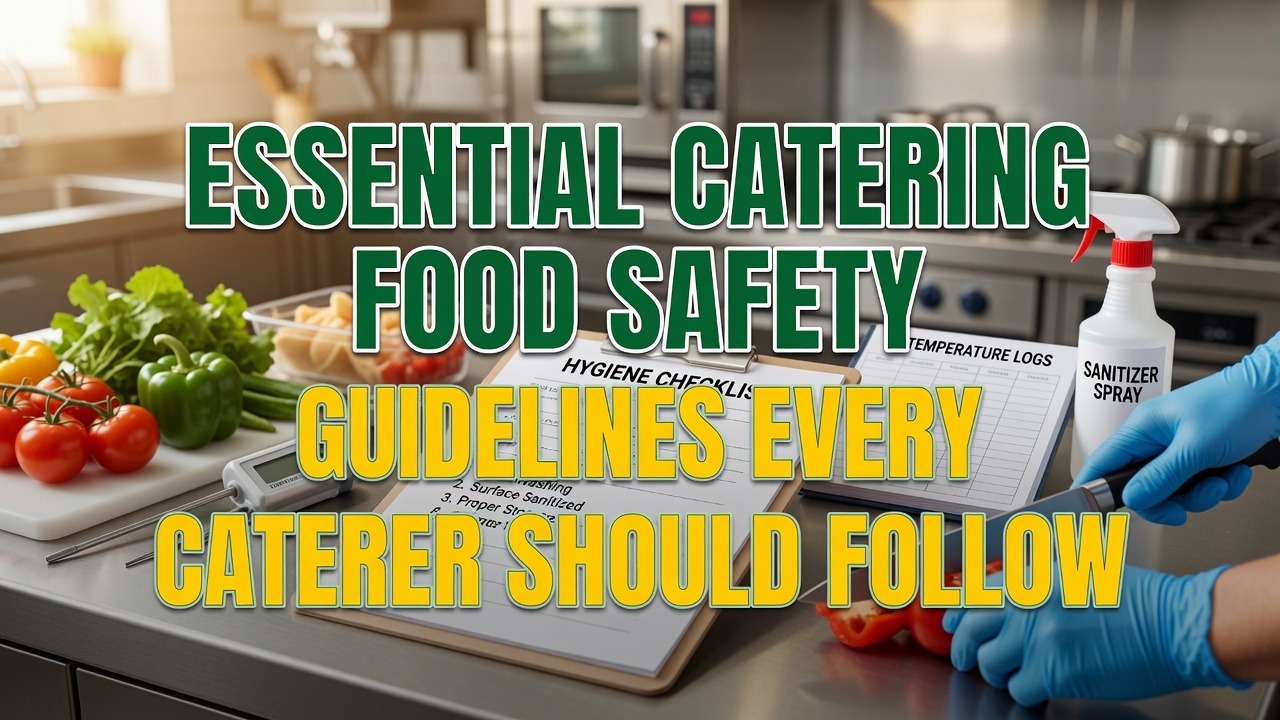

Food safety is one of the most critical responsibilities in the catering industry. Whether you are handling a small private gathering or a large corporate event, following proper catering food safety guidelines ensures that every dish served is safe, fresh, and free from contamination. Ignoring these practices can lead to foodborne illnesses, legal issues, and damage to your reputation.
This guide breaks down the essential safety practices every caterer should follow to maintain high standards and deliver safe, high-quality food every time.
Catering involves preparing, transporting, and serving food in environments that are often outside a controlled kitchen. This increases the risk of contamination and temperature abuse.
Following proper catering food safety guidelines helps:
Food safety is not just a requirement—it is a core part of professional catering operations.
One of the most important aspects of food safety is maintaining strict personal hygiene among all staff members.
Catering employees should always:
Even minor lapses in hygiene can lead to contamination, making this a key part of catering food safety guidelines.
Incorrect storage is one of the leading causes of food spoilage and contamination in catering.
To maintain safety:
Proper storage ensures ingredients remain fresh and safe until they are used for preparation or service.
Cooking food at the correct temperature is essential to kill harmful bacteria.
Caterers should always use a food thermometer to ensure accuracy:
Undercooking food is a major risk factor in foodborne illnesses, making temperature control a vital part of catering food safety guidelines.
Cross-contamination occurs when harmful bacteria spread from one surface or food item to another.
To prevent this:
Maintaining separation is essential for safe catering operations.
Transporting food from the kitchen to the event venue requires extra care.
Best practices include:
Transportation is often overlooked, but it is a crucial step in maintaining catering food safety guidelines.
Cleanliness in preparation areas directly impacts food safety.
Caterers should ensure:
A clean environment significantly reduces the risk of contamination.
Leftover food must be handled carefully to avoid spoilage and health risks.
Guidelines include:
Proper leftover management is an important extension of catering food safety guidelines.
Well-trained staff are essential for maintaining food safety standards.
Catering businesses should ensure:
Continuous education helps maintain consistent safety practices across all events.
Food allergies are a serious concern in catering services.
To manage allergens effectively:
Proper allergen management is a key part of modern catering food safety guidelines.
Food safety is the backbone of successful catering. From preparation and storage to transportation and service, every step must follow strict hygiene and safety standards. By implementing these catering food safety guidelines, caterers can protect their clients, enhance their reputation, and ensure every event runs smoothly without health risks.
Consistency, training, and attention to detail are what separate professional caterers from the rest.



Subscribe our newsletter for latest news and updates with you!
Elote King Atlanta © 2026 – All Rights Reserved.